12+
Years of Experience
3000+
Satisfied Clients
5+
International Presence
99%
Success Rate
100%
Authenticity And Transparency
Highlights
Vastu For Main Home Entrance - Size, Direction & Material
Correct Direction
Accurate Direction Invite Positive EnergiesUsing The Right Material
Do Not Have Doors Built With PlasticFree From Defects
Entrance Door Should Not Have Cracks Or Any Defects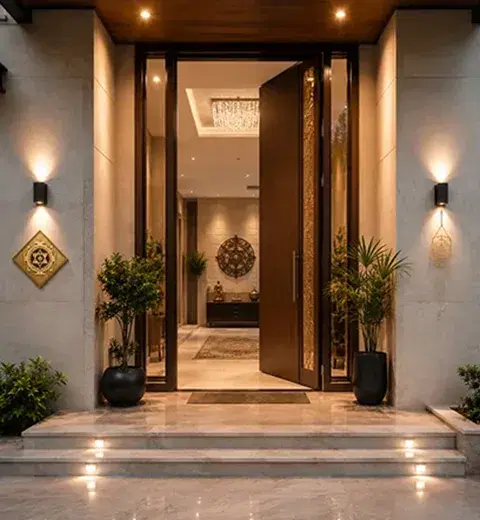
About
About Vastu For Main Home Entrance
Your main home entrance is the single point where the whole outside world meets your home, and Vastu for the main entrance is the practice of setting that meeting point so the right energy flows in. Think of the main door as the mouth of the house: everything that enters - light, air, the people who visit, and the subtle energy Vastu is concerned with passes through it first and then spreads to every room.
That is why Vastu treats it as the most important opening in the building. Get the direction right and prosperity, health and good opportunities tend to follow the family, and the home feels welcoming from the moment you step in. Get it wrong and progress can feel quietly blocked, no matter how carefully the rooms inside are arranged.
The reassuring part is that a less-than-perfect entrance is rarely a lost cause; most issues can be softened with colour, light, a raised threshold and a few simple corrections rather than rebuilding.
The north-east, north and east are the most auspicious directions for a main Home Entrance as per Vastu. Each carries a different quality of energy, so the best one depends partly on what your family wants to strengthen. All three welcome the morning sun, which Vastu treats as the purest form of incoming energy.
Direction alone is not the full story. Within every side of the house there are specific bands, called padas, and the exact pada your door opens on matters as much as the broad direction. When two Vastu schools differ, it is usually about padas, not the headline direction. If you are building fresh, aim for a favourable pada on a favourable side. If the house is already built, work with what you have and remedy the rest.
Main Home Entrance Direction Map
| Direction (Zone) | Element | Energy / Why | Best For | Verdict |
|---|---|---|---|---|
| North-East (Ishanya) | Water | Pure morning light, sacred zone | Overall health & harmony | Excellent |
| East (Surya) | Air | Sunrise, new beginnings | Recognition & good health | Very Good |
| North (Kuber) | Water | Zone of wealth | Money & career growth | Very Good |
| North-West (Vayu) | Air | Movement and support | Networking; use with care | Moderate |
| West (Varuna) | Water | Gains and stability | Acceptable with remedies | Moderate |
| South-East (Agni) | Fire | Heat and restlessness | Generally avoid | Weak |
| South (Yama) | Fire | Heavy, forceful energy | Avoid where possible | Weak |
| South-West (Nairutya) | Earth | Must stay sealed and stable | Avoid as a Home Entrance | Poor |
North-East (Ishanya) - the most balanced choice
The north-east is the sacred zone of the home and the strongest position for a main door. It draws in soft morning light and is linked with clarity, health and spiritual calm. A door here supports the whole family's wellbeing.
North (Kuber) - for wealth and career
The north belongs to Kuber, the keeper of wealth. A north-facing main door is associated with financial growth, professional stability and fresh opportunities, which makes it a favourite for working families and business owners.
East (Surya) - for recognition and health
East is where the sun rises, so an east-facing Home Entrance is tied to new beginnings, good health, fame and social respect. It suits families who value visibility and steady vitality.
The south-west (Nairutya) is the least suitable direction for a main Home Entrance. This corner is meant to stay heavy, sealed and stable; cutting an opening here is believed to unsettle finances, reputation and health, and Vastu links it with recurring obstacles. A plain south Home Entrance is also considered challenging and is best avoided where a better option exists.
Beyond direction, watch the placement itself. A door that opens onto a blank wall, a staircase going down, a toilet, or a large tree directly in front is treated as an obstructed entry. Avoid two main doors facing each other in a straight line, and keep the Home Entrance out of the exact corner of a wall. Cracked doors, creaking hinges and a dark, damp threshold all weaken the entry, whatever the direction.
The direction can be correct and the entry still feel heavy if the structure around the door works against it. These are the issues that come up most often in real homes, with the fix for each.
| Structural Issue | Why Vastu Flags It | Practical Remedy |
|---|---|---|
| Door faces a downward staircase | Positive energy drains out | Add a raised threshold and a screen or curtain |
| Toilet above or facing the door | Contaminates incoming energy | Keep the toilet door shut; add a partition |
| Beam or shoe-loft over the door | Presses down on the entry | Paint it light; keep the loft closed and tidy |
| Door aligned to a back door/window | Energy rushes straight out | Break the line with a plant or curtain |
| Tree or pole right in front | Blocks and obstructs entry | Shift the path; keep the doorway clear |
| Cracked door or broken hinges | Weakens the entry point | Repair or replace promptly |
| Dark, damp threshold | Energy turns stagnant | Add warm lighting; keep the area dry |
| Door in the exact wall corner | Unstable entry position | Reposition, or remedy with symbols |
The direction sets the foundation; the details decide how cleanly that energy actually enters. Most of these are easy to fix in an existing home.
Door design and material
Make the main door the largest door in the house, and let it open inwards in a clockwise direction. Solid wood is preferred over metal or hollow panels. A well-made wooden door with a clean nameplate and a working bell signals a welcoming, cared-for home.
Threshold, steps and lighting
Add a small raised threshold (dehleez) at the doorway; it is believed to hold positive energy in and keep negativity out. Steps leading up to the door should be odd in number, such as three, five or seven. Keep the Home Entrance well lit, ideally with warm light, and make sure the door does not scrape or stick.
What to keep away from the Home Entrance
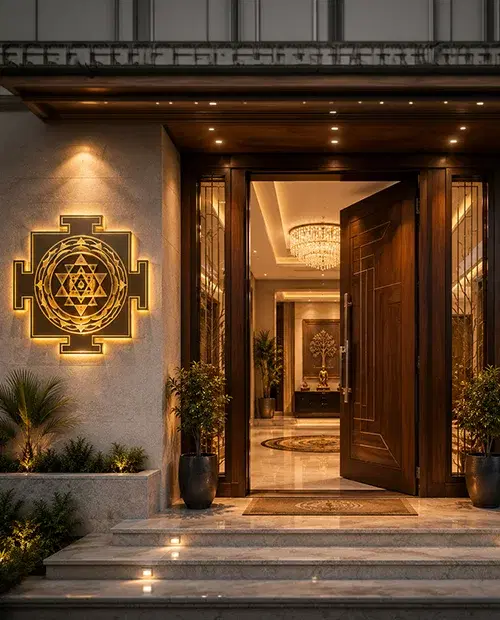
Do not place a shoe rack, dustbin, broken furniture or a mirror directly facing the main door. Avoid animal or aggressive imagery on the door. Keep the area just outside clean and open so energy has a clear path in - a small plant or a Swastika, Om or auspicious toran is welcome, clutter is not.
Colour should follow the direction of the door. Wood-brown and warm yellow are broadly auspicious and safe for most main doors, while black and very dark shades are best avoided at the entry point. Use the map below to match the shade to your door's direction.
| Door Direction / Wall | Recommended Shades | Why It Works |
|---|---|---|
| North-East | White, cream, soft pastels | Suits the pure, sacred zone |
| East | Light blue, white, wood-brown | Complements the sunrise air energy |
| North | Green, light blue | Supports growth and wealth flow |
| North-West | White, grey, cream | Steadies the airy zone |
| West | Blue, white, wood tones | Balances the water zone |
| South-East | Silver, white, orange accents | Cools the fire zone |
| South | Deep yellow, red, peach | Warms and settles a tough zone |
| South-West | Yellow, peach, muted brown | Grounds the heavy earth zone |
| Any Main Door | Wood-brown, warm yellow | Broadly auspicious; avoid black |
Not every home can have its door on the ideal side, and Vastu offers practical remedies for this exact reality. For a south-west or south Home Entrance, fix a protective symbol such as Om, Swastika or Trishul on the door, and place a pair of brass figures inside the threshold to act as an energetic filter. A yellow doormat outside a south-west door is a simple, commonly used correction.
Keep a defective door well lit and freshly painted, add a raised threshold, and hang an auspicious toran. Where a door is genuinely working against the home, the strongest remedy is to seal it and open a new Home Entrance on the north, east or north-east side. Remedies help meaningfully, but they manage the issue rather than guarantee a perfect result - an honest assessment matters more than a long list of fixes.
Benefits
Benefits of Correct Main Home Entrance Vastu
Prosperous Family Bond
Enhanced Spiritual Essence
Welcomes Vibrant and Good Vibe
Growth Opportunities
Vastu Tips
Important Tips & Points of Main Home Entrance Vastu
POINTS TO BE TAKEN UNDER CONSIDERATION
- Entrance Doors Comprising Dull Colours Attract Low Energies
- Evade Keeping Dustbins Or Shoes Near Main Door As It Blocks The Flow Of Good Energy
- Sharp or Harsh-Sounding Bell Invites Problems Into Your House
- Lead To Severe Conflicts Amongst Loved Ones
- A Chaotic Entrance Can Bring Inactivity, Resulting In No Progress
Scientific Vastu
Subscribe on YouTubeMake Home Entrance Space Vastu Compliant
Featured
Why Choose Us
Why Choose Layered Vastu for Main Home Entrance Vastu
100% Certified
Authentic Documents, Showcasing Legality100% Customer-Centric
Customization As Per Client's RequirementLifetime Assistance
Offering Services For The Entire LifespanFAQ
Vastu Tips for Main Home Entrance - People also ask
The north-east is the best direction for a main Home Entrance, followed by the north and east. These sides receive the morning sun, which is treated as pure incoming energy. North-east supports overall wellbeing, north strengthens wealth and career, and east brings recognition and good health to the family.
A south-west main door is not good as per Vastu; the south-west (Nairutya) is the weakest zone for a home entrance and should stay heavy and sealed. An opening here is linked with money, health, and reputation troubles. If it cannot be relocated, use protective symbols, warm colours and a yellow doormat as remedies.
The main Vastu remedy is to fix protective symbols like Om or Swastika on the door, add a raised threshold, keep the entry brightly lit, and place brass figures inside as an energy filter. For a seriously defective door, the strongest remedy is sealing it and opening a new Home Entrance on the north, east or north-east side.
Wood-brown and warm yellow are broadly auspicious main door colours as per Vastu. Match the shade to the direction: white and pastels for north-east, green and light blue for north or east, and warmer red or peach tones for a south or south-west door. Avoid black and very dark colours on the main Home Entrance.
Yes, the main door should be the largest door in the house as per Vastu, because it is the primary channel for energy entering your home. Make it from solid wood, let it open inwards in a clockwise direction, and keep it well maintained. A bigger, stronger main door signals a welcoming and prosperous home.
The main door should open inwards and in a clockwise direction as per Vastu, drawing positive energy into the home rather than pushing it out. The door should move smoothly without creaking or sticking. A raised threshold at the doorway is recommended to hold beneficial energy inside and keep negativity from entering.
As per Vastu, do not keep a shoe rack, dustbin, broken furniture, or a mirror directly facing the main Home Entrance, and avoid a staircase, toilet or large tree blocking the door. Keep the area outside clean and open. A small plant, an auspicious toran, or an Om symbol near the entry is welcome instead.
A plain south-facing main Home Entrance is considered challenging as per Vastu and is best avoided where a better option exists, though the exact pada it opens on affects the result. If a south door is unavoidable, remedy it with warm colours, a threshold, good lighting and protective symbols rather than assuming it cannot work at all.
Explore More
Similar Vastu Services
Vastu For Bedroom
Make it Vastu Compliant
Read More
Vastu For Cross Ventilation
Let the fresh air enter your home
Read More
Vastu For Garage
Welcome goodness from the garage
Read More
Vastu For Toilets
Make your living healthy
Read More
Vastu For Villa
Get the beautiful and positive living
Read More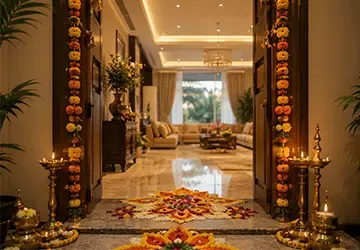
Vastu For Griha Pravesh
Make an auspicious entry
Read MoreReady to Transform Your Space?
Get expert Vastu guidance from Seema Bhatia. Start your journey to harmony and prosperity today.